
On this page
How micro-mesh works
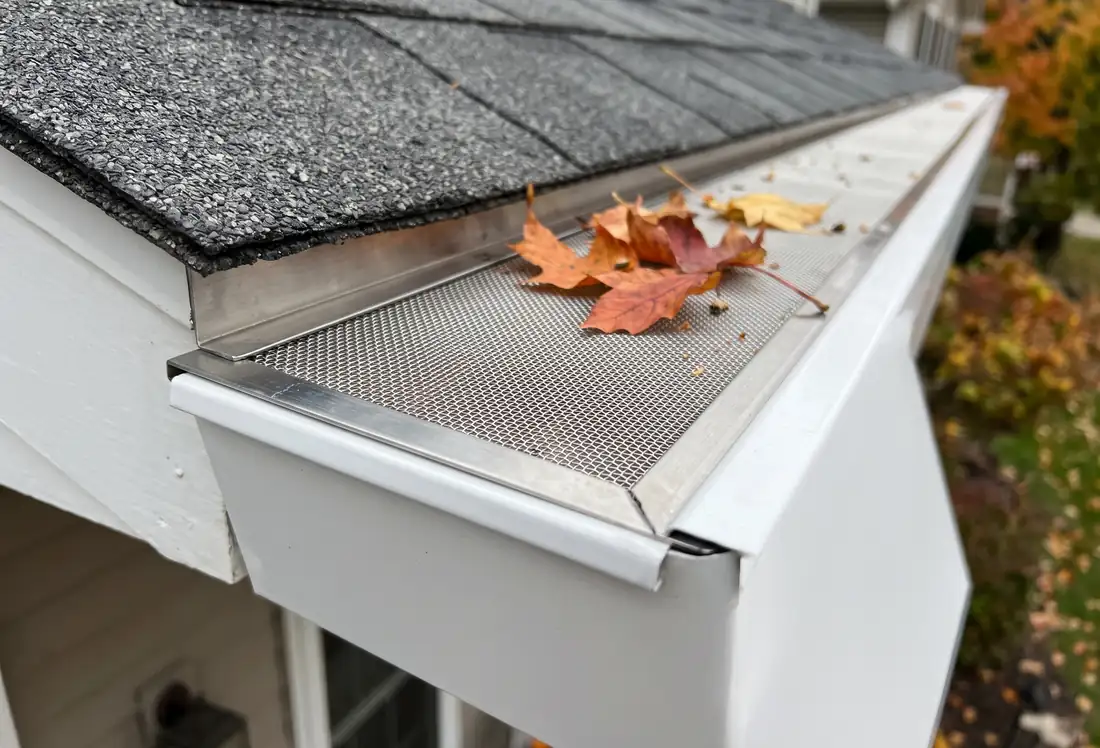
A micro-mesh guard is a fine stainless steel mesh, often finer than window screen, stretched over a rigid aluminum or steel frame. The frame sits on the gutter and fixes to the front lip and the fascia or drip edge. Water flows through the mesh by surface tension. Debris stays on top, dries, and is blown or washed off.
Why it suits High Point
The guard question is a tree question, and the dominant trees here are pines and oaks.
Loblolly pine. By far the most common pine across the eastern Piedmont. Its needles come in bundles of three, 6 to 9 inches long, slender and stiff. They drop through the year rather than in one season. On a coarse screen or perforated cover, needles slip into the holes end-first and then lie across them, building a mat. On micro-mesh, they cannot get in.
Oaks and other hardwoods. Leaves sit on top of any guard. The small debris, oak catkins in spring, seeds and the spiky sweetgum balls, gets through coarser guards. Micro-mesh keeps it out.
What it does not do
- It does not end maintenance. Spring pollen can leave a film that slows water entry; a brush clears it.
- It does not stop needles collecting on top. Under dense pines, a layer can build on the mesh between rains.
- It does not fix a bad gutter. If the gutter sags or leaks, fix that first.
Installation done well
- Clean and inspect the gutters, resealing and re-hanging where needed.
- Fit the guard to the gutter lip and fascia or drip edge, not under the shingles where possible, to avoid shingle warranty problems.
- Trim and seal corners so there are no gaps for debris.
- Consider valleys, where water arrives fast. Some installers add an outlet or diverter.
- Flush downspouts so the system starts clear.
Heavy rain
In the Triad's summer downpours, micro-mesh passes a lot of water, but a coated mesh on a steep roof can let some water skate over the front. Keeping the mesh clean and the gutters sized correctly, with 6-inch gutters on big roofs, reduces it.
Ice
During freezing rain, mesh can glaze over briefly, and the guard adds surface for ice to build on. Events are usually short here, but sound hangers matter. See the ice storm guide.
Is it worth it?
Micro-mesh is usually the most expensive guard type per foot. It pays on houses that need frequent cleaning under pines, on two-storey homes where every cleaning means a tall ladder, and for owners who simply do not want to climb. On lots with few trees, it is often not worth it. Read are gutter guards worth it.
What upkeep looks like
On a typical High Point lot with pines and hardwoods nearby, micro-mesh owners usually:
- brush or blow off the top after the main leaf drop in late fall;
- brush off any pollen film in late spring;
- look under a section once a year;
- flush the downspouts annually.
Two-storey houses may still need a contractor for that, but the visit is shorter, and the gutters keep working between visits.
Comparing micro-mesh products
Products differ in frame material, mesh fineness, how they fasten and how they handle corners. Ask to see a sample, ask how it fastens, and ask for the warranty in writing, including who honors it: the manufacturer, the installer or both.
Cost factors
- Length of gutter.
- Guard brand and frame material.
- Gutter cleaning and repairs first.
- Height and access.
- Corners, valleys and special pieces.
Micro-mesh specifications
| Feature | Options | What to look for |
|---|---|---|
| Mesh | Stainless steel, various fineness | Openings far smaller than a pine needle's width |
| Frame | Aluminum or steel | Rigid enough not to sag |
| Mounting | Fascia and lip, or under shingles | Fascia mount avoids shingle warranty issues |
| Fit | 5-inch, 6-inch, half-round versions | Must match your gutter |
| Corners and valleys | Mitred or special pieces | No gaps for debris |
| Warranty | Manufacturer, installer or both | Get it in writing |
Mesh and storm intensity
At High Point's NOAA Atlas 14 10-year, 5-minute intensity of 6.97 inches per hour, clean micro-mesh admits water readily on typical residential pitches. Coated mesh does not. Brushing off pollen in late spring, before summer storm season, keeps it working.