
On this page
The main types
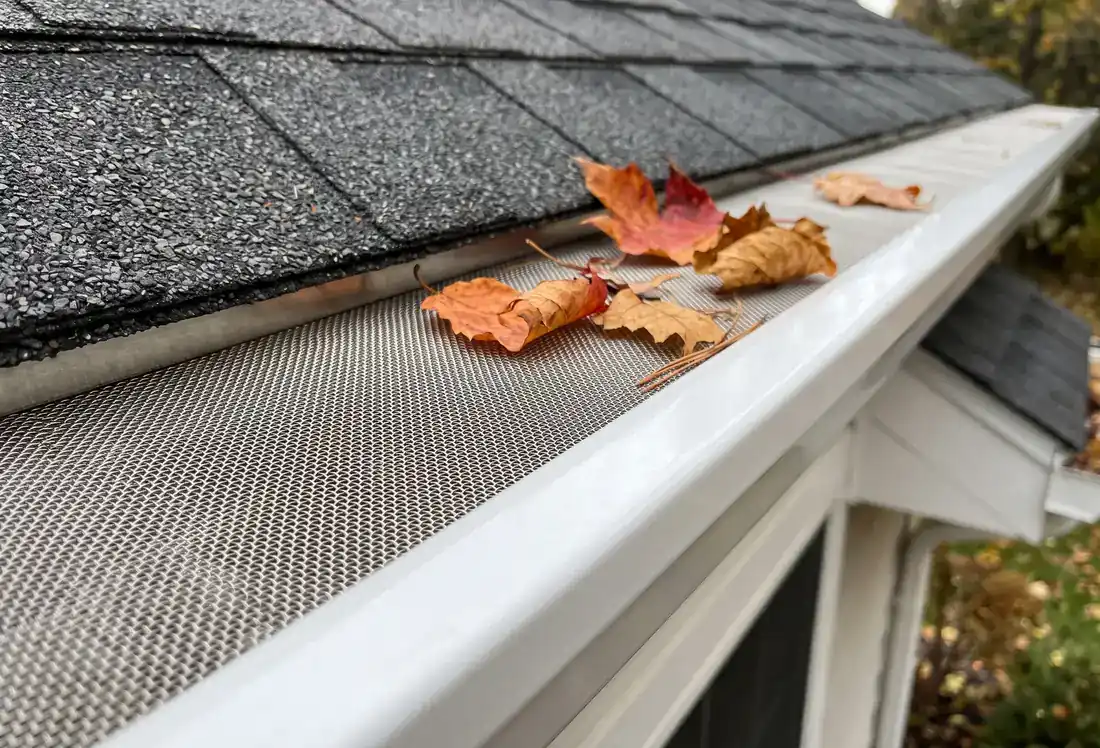
Plastic and wire screens. Snap-in or lay-in screens with openings around a quarter inch. Inexpensive and easy to fit, but they sag, warp and trap debris.
Perforated aluminum covers. Rigid sheets with punched holes or slots. Stronger than screens and long-lasting. They stop broad leaves well.
Reverse-curve (surface tension) covers. A solid hood that curves over the gutter. Water follows the curve into a slot; leaves fall off the front. Often sold as a premium system.
Foam and brush inserts. Sit inside the trough. They keep out large leaves but collect fine material.
Where they work
These guards do well under broadleaf trees: maples, oaks dropping whole leaves, tulip poplars. Leaves are large and flat, and they sit on top or slide off.
Where they struggle here
Around High Point, pines are a big part of the canopy. Loblolly needles are 6 to 9 inches long, stiff and slender, and they fall all year. On a screen or perforated sheet, needles slide in end-first, lodge across the holes and catch everything that follows. Within a season, the guard itself is clogged, and the gutter below may be too.
Reverse-curve covers have their own issues with needles: they can catch in the entry slot. Seeds, catkins and the fine grit that washes off shingles also collect there.
Heavy rain
Summer storms test reverse-curve guards hardest. On steep roofs, water can travel fast enough to shoot past the curve. High Point's NOAA normal of 48.27 inches a year includes many short, heavy downpours.
When to choose them anyway
- Broadleaf trees only, no pines nearby.
- A budget fix on a one-storey house you can reach easily.
- A rental or short-term property.
Otherwise, micro-mesh is usually the better buy around here.
Maintenance
All guards need some upkeep:
- Brush debris off the top after leaf drop.
- Lift a section once a year and look underneath.
- Flush downspouts.
- Check the guard is still fixed after storms.
Fitting them well
- Clean and repair the gutters first.
- Fix guards to the gutter lip and fascia, not under shingles where avoidable.
- Close gaps at corners and end caps.
- Check that downspout outlets are clear.
Read are gutter guards worth it and the pine needles guide before deciding.
If you already have screens
Many High Point homes have older snap-in screens fitted years ago. Signs they are no longer helping:
- needles and debris matted on top and stuck in the holes;
- screens sagging into the trough;
- water pouring over the front in moderate rain;
- seedlings growing on the screen.
Often the best step is to remove them, clean and repair the gutters, and decide whether to fit micro-mesh or go without guards and clean on a schedule. The cleaning guide suggests schedules by tree cover.
Cost factors
- Guard type and material.
- Length and number of corners.
- Cleaning and repairs before fitting.
- Height and access.
Guard types compared for High Point lots
| Type | Pine needles | Oak leaves | Seeds and catkins | Heavy storms |
|---|---|---|---|---|
| Plastic or wire screen | Poor | Fair | Poor | Fair |
| Perforated aluminum cover | Poor | Good | Fair | Good |
| Reverse-curve | Fair | Good | Poor | Can overshoot on steep roofs |
| Foam insert | Poor | Fair | Poor | Can hold water |
| Brush insert | Poor | Fair | Poor | Fair |
| Micro-mesh (for comparison) | Good | Good | Good | Good when clean |
Storm performance
Reverse-curve guards depend on water clinging to a curved nose. In High Point's short, intense storms, with NOAA's Atlas 14 estimating 5.47 inches per hour for a 5-minute burst even in a 2-year storm, water on a steep roof can move too fast to follow the curve and shoot past the gutter. Screens and perforated covers admit water easily but trap needles that later block flow.
Making the most of existing screens
If you already have screens and want to keep them, clean them each spring and fall, check that they have not sagged into the trough, and lift a section to look underneath once a year.